







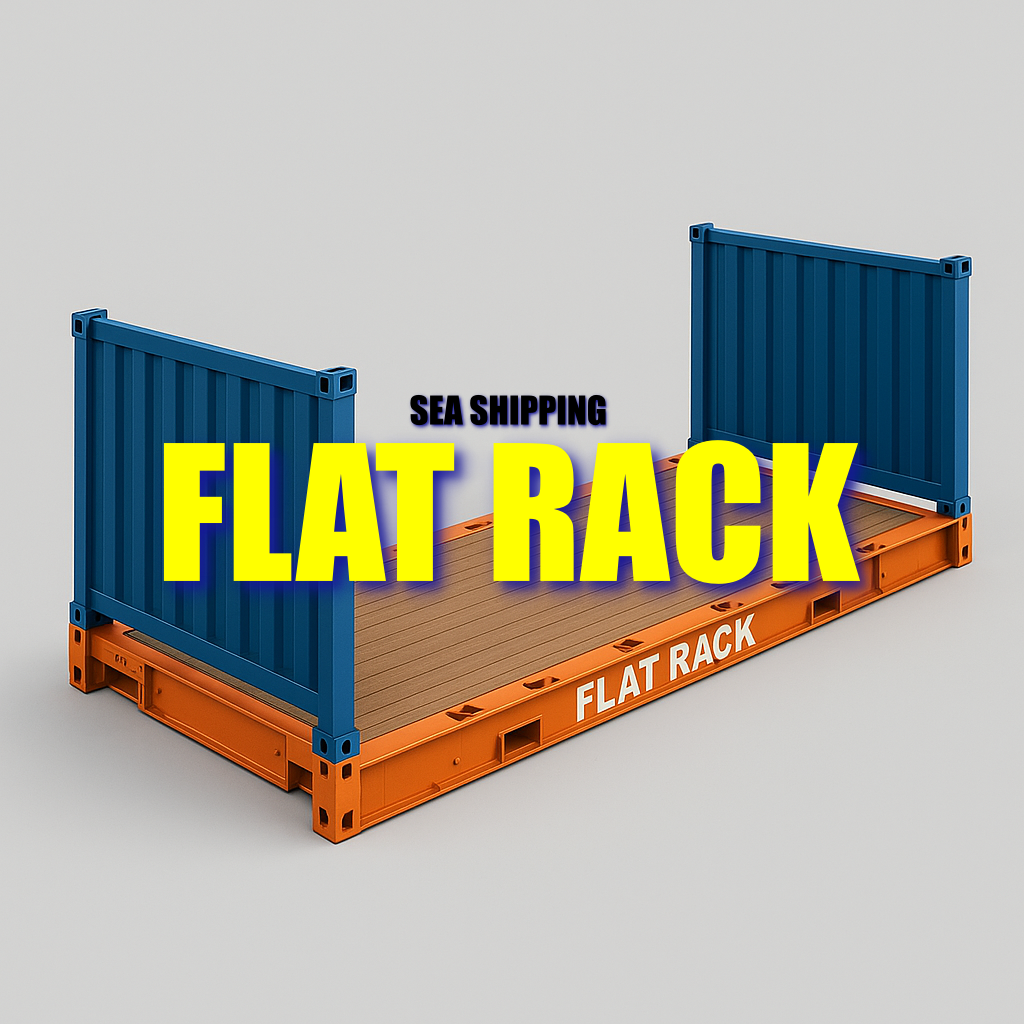
Sea shipping, also known as maritime transport, is one of the oldest and most efficient methods of moving goods across the globe. It serves as the backbone of international trade, accounting for approximately 90% of the world’s cargo transportation. Among the many components that make sea shipping effective, the use of standardized containers is crucial. Among these containers, the flat rack container plays a unique and vital role in transporting oversized or irregular cargo.
Let us explores the fundamentals of sea shipping, including its structure, processes, and benefits, and then delves deeply into the flat rack container—its features, use cases, and best practices.
Part I: Fundamentals of Sea Shipping
1.1 Definition and Importance
Sea shipping involves transporting goods by ships through oceans and seas. It enables global commerce by facilitating the import and export of goods in large volumes. Shipping lines operate between major ports, allowing businesses to connect with international markets cost-effectively.
1.2 Key Components of Sea Shipping
a. Ports and Terminals
Ports are critical hubs in maritime logistics. They handle loading and unloading operations, storage, customs clearance, and multimodal connections (e.g., rail and truck transport).
b. Vessels
Cargo ships vary by type:
- Container ships – Carry standardized containers (20ft, 40ft, etc.)
- Bulk carriers – Transport unpackaged cargo like coal or grain
- Tankers – Move liquids such as oil, gas, and chemicals
- Ro-Ro ships – Carry wheeled cargo like cars and trucks
c. Containers
Containers revolutionized sea shipping. They are:
- Standardized: Compatible worldwide
- Secure: Reduce theft and damage
- Efficient: Allow intermodal transport without repacking
Common types include:
- Dry containers
- Refrigerated containers (reefers)
- Open-top containers
- Flat rack containers
1.3 Advantages of Sea Shipping
- Cost-efficiency for large volumes
- Environmental friendliness compared to air freight
- Global accessibility
- Versatility in handling various cargo types
1.4 Key Players in the Shipping Process
- Shippers: Companies or individuals sending goods
- Freight forwarders: Intermediaries who organize shipments
- Shipping lines: Operators of vessels
- Customs brokers: Experts in regulatory compliance
- Port authorities: Manage port operations
Part II: Flat Rack Containers – In-depth Analysis
2.1 What is a Flat Rack Container?
A flat rack container is a specialized shipping container designed for cargo that is too large, too heavy, or too awkwardly shaped to fit into standard containers. It has a flat bed and end walls only (which may be fixed or collapsible), and lacks side walls and a roof.
Flat racks provide a robust, flexible platform for transporting cargo such as:
- Heavy machinery
- Industrial equipment
- Vehicles
- Pipes and tubing
- Boats or yachts
They are typically available in 20-foot and 40-foot sizes, following ISO container standards.
2.2 Key Features and Specifications
a. Structure
- Flat base: Made of steel or a steel-reinforced wooden floor
- End walls: May be fixed or collapsible for flexibility
- No side walls or roof: Allows over-width and over-height cargo
- Corner castings: Enable stacking and securement on ships
b. Dimensions (approximate)
| Feature | 20’ Flat Rack | 40’ Flat Rack |
|---|---|---|
| Inside Length | 5.94 m | 12.05 m |
| Inside Width | 2.35 m | 2.35 m |
| Inside Height | 2.35 m | 2.35 m |
| Max Payload | 30,000 kg+ | 40,000 kg+ |
Note: Dimensions may vary slightly by manufacturer or shipping line.
2.3 Benefits of Using Flat Rack Containers
a. Flexibility
Flat racks accommodate out-of-gauge (OOG) cargo that exceeds the standard dimensions of dry containers.
b. Strength
Designed to carry heavy and bulky equipment that standard containers cannot handle.
c. Easy Handling
Flat racks can be loaded from the top or sides, making it convenient for forklifts or cranes to position cargo.
d. Stackability
Despite lacking full walls, flat racks are engineered to be safely stacked and secured on ships.
2.4 Use Cases
Flat rack containers are essential in sectors such as:
- Construction: Transporting excavators, cranes, and prefabricated steel parts.
- Oil & Gas: Moving pipes, rigs, and refinery components.
- Automotive: Shipping large trucks or disassembled vehicles.
- Manufacturing: Relocating industrial machinery and generators.
2.5 Loading and Securing Cargo
Cargo must be properly secured using:
- Lashing belts
- Chains
- Wooden blocks or wedges
- Steel supports
Proper weight distribution is critical to prevent shifting during transit. Many ports or carriers will reject improperly secured flat racks due to safety concerns.
2.6 Flat Rack vs. Other Container Types
| Feature | Flat Rack | Open Top | Dry Container |
|---|---|---|---|
| Side Walls | No | Yes | Yes |
| Roof | No | No (soft/hard top) | Yes |
| OOG Cargo | Excellent | Good | Poor |
| Weight Capacity | High | Medium | Standard |
| Loading Method | Top/Side | Top | Front only |
Part III: Operational and Commercial Considerations
3.1 Booking a Flat Rack Shipment
When booking a flat rack, provide detailed specifications:
- Dimensions and weight of the cargo
- Method of loading (crane or forklift)
- Lashing requirements
- Center of gravity (for uneven cargo)
3.2 Freight Costs
Flat racks typically incur higher freight charges due to:
- Special handling
- Additional port fees for OOG cargo
- Increased space requirements on vessels
Shipping lines often apply OOG surcharges, especially when cargo protrudes beyond the container’s frame.
3.3 Regulatory and Documentation Needs
Flat rack shipments may require:
- Special permits
- Customs declarations with detailed cargo description
- Safety compliance checks
Hazardous materials must be declared and packed per IMDG Code regulations.
3.4 Insurance Considerations
Due to the exposed nature of flat rack cargo, marine cargo insurance is strongly recommended. Coverage should include:
- Damage during lifting/loading
- Weather-related damage
- Theft or loss during transit
Shippers should document cargo condition with photographs before and after loading.
Part IV: Challenges and Best Practices
4.1 Challenges
- Exposure to weather: No protection from rain or sea spray
- Handling risks: Improper loading can damage cargo or ship
- Availability: Flat racks are fewer in number and may require advance booking
- Regulatory hurdles: Some ports impose restrictions or additional inspections
4.2 Best Practices
- Use professional packing and securing services
- Check vessel stack plans for weight and clearance limits
- Coordinate closely with freight forwarders and port handlers
- Ensure accurate documentation to avoid customs delays
Conclusion
Sea shipping is an essential element of global trade, providing a cost-effective, reliable method for transporting goods. Among the many container types used in maritime transport, the flat rack container holds a unique place for its ability to handle oversized, heavy, and non-standard cargo.
Understanding how and when to use flat racks—and the precautions necessary to do so safely—is vital for shippers working with complex logistics needs. Whether you are transporting industrial machinery, construction vehicles, or any form of out-of-gauge cargo, flat racks offer the flexibility and strength required for the job.
By combining sound logistics planning, proper loading techniques, and an understanding of international shipping standards, flat rack containers can be leveraged to overcome many logistical challenges, ensuring cargo reaches its destination safely and efficiently.
For Event Media Coverage can contact us by email to us
Please subscribe our Youtube channel for more updates
https://www.youtube.com/@ALMediaChannel
MALAYSIA MOST CREATIVE INTERIOR PHOTOGRAPHER, ALAN LIM
https://www.alifebe.com/malaysia-interior-photographer-alan-lim/
ALAN LIM, Founder of AL Media Group
http://www.alan-lim.com